What Does It Mean to Be Online?
There's something I've been thinking about ever since signing up for bear blog, and I've finally found the right angle to talk about it. It's also what I was planning to talk about before I found out I had gone viral, but it happens to slot in really well as a follow up to that conversation. I want to talk about what it means to be online, and how that meaning has changed in just a decades time.
I wanna start with a shocking admission: despite being a nerd and working in tech, I was a relatively latecomer to the Internet and its culture. Our household got connected when I was 16, but the computer was in the common TV room, which means that me and my sister didn't have much privacy when using it. Our parents would know if we had been in front of the screen for too long, even if they didn't necessarily know what we were interacting with. So I started being really online when I started university in 2010, and by then Facebook was the hot shit1. Now, I really need you to know (or remember) just how different Facebook was back then. If I had to convince you in one sentence I would say this: I remember a time when you could get to the bottom of the Facebook feed and couldn't scroll anymore. “You're all caught up”, it would say, and you had to log off and do something else as you waited for your social circle to write new posts. You had run out of Internet to read.
Most importantly, those posts were written by hoomans. There were public pages collecting pictures, memes and whatnot, but they were obviously curated by hoomans, and the contents were made by hoomans for the only purpose of our own entertainment. Back then, being very online had this weird taste of being “in” with the cool crowd, where the cool crowd was a vague “everyone out there”. I'm being idealistic and thinking about it too much, but I had this feeling that maybe people weren't so different from each other, if we all could look at the same image and relate to it in the same way.
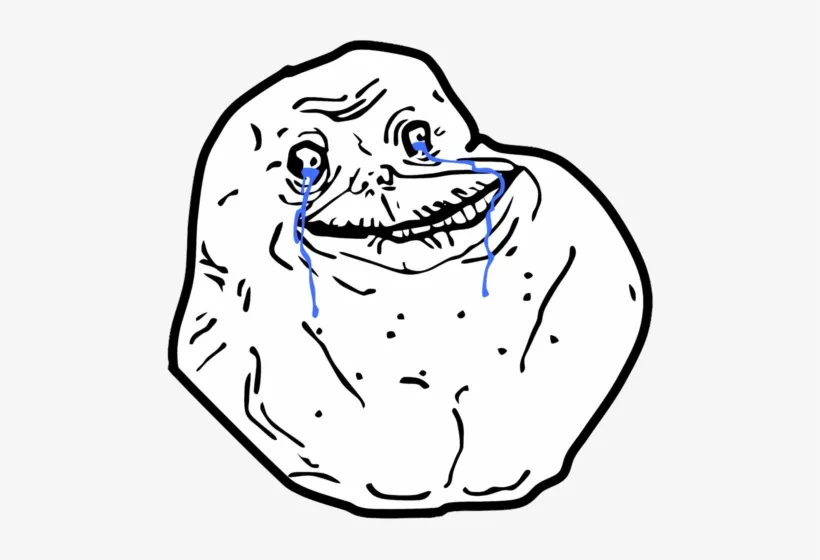
Of course that doesn't mean that everything was nice and good: there was plenty of hateful, incredibly problematic content pushed mostly by teenagers trying to look edgy. I can't argue whether it was better or worse than it is today, but it does feel different to know that the racist yelling at you in the comments had always been a horrible person, as opposed to somebody's lonely uncle being high on propaganda. Back then, we had no idea. But still, it was all clearly about people trying to connect with other people (and teenagers trying to be edgy, but that's what teenagers are for). How many times have I read a meme and thought, “so I'm not the only one”?
My first year of college was really hard for me, as I had my first serious struggle with depression. I would hunker down in my dorm room, scrolling endless Facebook meme pages while everyone else was having dinner together in the common dining room. I wasn't studying and I wasn't eating. I was choking on a malaise that I couldn't explain nor describe. Facebook and its meme pages did not create the problem, but they did offer anesthesia for the mind.
I deleted my account about one year later, as part of my recovery process. After that, my online life became centered around content that felt more intellectual: forums, blogs, the FOSS world, the early Hacker News, even Wikihow, which of course I read “ironically”. It was all about learning. I still felt that I was keeping up with the culture, but observing it from a safe distance. And while I witnessed first hand the rise of sponsored content, I had no idea of what it was doing to people's private lives.
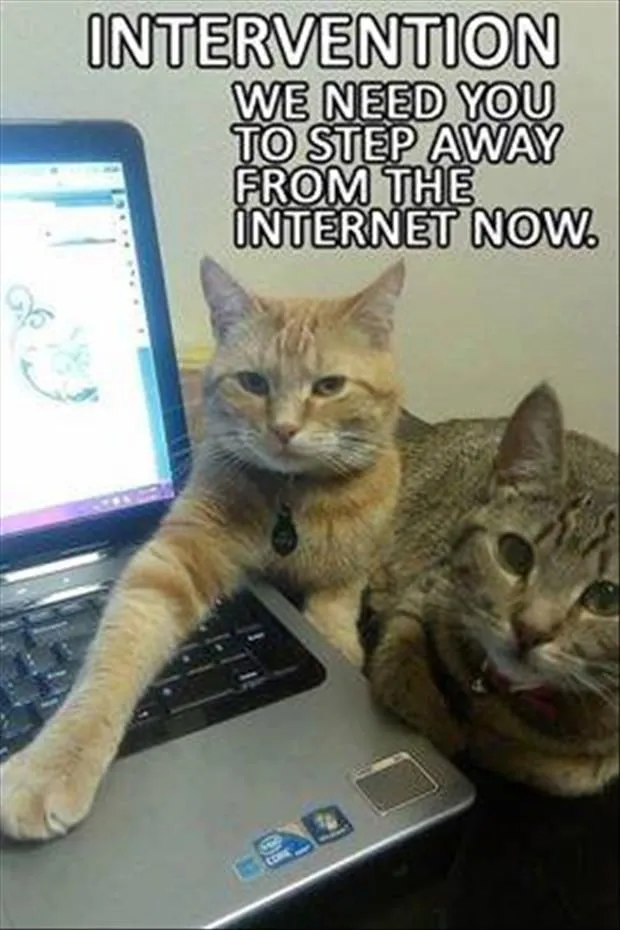
Fast forward to 2020 and covid finds me living in a foreign country, far from my family and friends and suddenly very aware of how difficult it is to create deep connections as an adult. I signed up for Facebook again, thinking that it would help me keep in touch with them and up to date with what they were doing, as if I could still be part of their lives while not being there. Of course, that didn't happen at all. My feed quickly became and endless stream of ads, sponsored content and recommended content, occasionally interrupted by a cat picture. If I followed one of the recommended pages I would see its posts for about five minutes, before they were swallowed by a new wave of more pages demanding to be followed, and to not think too hard about the fact that I couldn't tell who or what was behind those pages. I almost never saw what my friends were doing. I knew they were active, because I could go to their walls and see their new posts, but somehow those posts would never make it to my feed. Worse still, you could keep scrolling forever and burn hours of your life without ever seeing anything you actually cared about. The thing that had made me quit Facebook years prior, and that nobody at the time had words to define, had been not only acknowledged but embraced: Facebook had perhaps never been healthy, but now it was no longer the place you went to see what your acquaintances were doing and waste an hour if you had it. We were now on social media because we were addicted to it, and the companies had stopped pretending that they cared, or that this wasn't the whole point to begin with. Being online had gone from being a pioneer of the new reality of the Internet to being a docile consumer, an apathetic shell looking for the next fleeting rush of dopamine.
There's much discussion nowadays about how everything is content and everyone a wannabe influencer, but there seems to rarely be an interest in investigating why. We have gotten so used to monetising everything that we cannot conceive of creating something just to enjoy the process and share a piece of our inner world with others, no strings attached. All social media platforms are just quicksand pits of advertisement and propaganda, where every post seems to have ulterior motives. Influencers are at best trying to sell you something, at worse they are backed by right-wing foundations and acting as a gateway into a much more sinister pipeline. Memes, viral phrases and trends are immediately fagocitated by corporations trying to relate to you, like dads trying to talk like their teenage children and with about as much success. At best, we feel like consumers, sometimes like the products. At worse, we become aware that we're nothing but the obstacle between the corporation and our money. When I was doing my research to start a blog, all the articles I could find were about mastering the SEO to maximize traffic, to maximize profit, because why else would you want a blog??? It took quite a long search to finally find some simple reviews of blogging platforms, so that I could choose mine.
Using bear blog has given me the feeling of the early Internet, with content made by people for people. Content that was insightful, funny, silly, vapid, imperfect and yes, at time problematic, but created because somebody wanted to have a conversation going. In an age in which were supposed to passively gorge endless advertisement and let AI create our media and shape our opinions, the indie Internet has become an unexpected act of resistance. It's where the real people live and it's what the whole Internet was supposed to be. So that's my take at the end of this long, weird journey: I want us, the people, to keep creating, sharing and engaging with each other. I want us, the people, to hold tight onto the Internet, because it was born ours and so it must remain.
=^.^=
there were other things too, of course, but this pawst deals primarily with social media, so I'll focus on Facebook. Facebook was also where the "normies" were.↩